Featured

Free Generators for Writers

Marble temples. Markets bursting with ripe fruit. Bustling metropolises glittering with glass and steel.

Details like these draw readers in. They create a sense of realism, build a story world that’s unique and memorable, and make readers fall in love with an imaginary place. If you’re in the world-building stage of writing, these fantasy name generators can help.

Character Generators

Mythological Creatures

  • The Fantasy Creature Name Generator is probably the most extensive list of random generators, including both common mythological creatures like dragons to the less-well-known kitsune of Japanese folklore.
  • The Beings and Creatures option for Seventh Sanctum covers aliens, animal-humanoids, dragons, fantasy races, and monsters.
  • The Fantasy/Mythical Animal Generator generates a paragraph devoted to depicting mythological beasts.

Plot Generators

  • The Plot Generator allows you to choose from short stories, movie scripts, fairytales, story ideas, opening lines, twists, and more. It even helps you to create a blurb for your story!
  • The Fantasy Plot Generator allows you to choose your genre: drama, fantasy, mystery, romance, or sci-fi.
  • The Writer’s Plot Idea Generator gives simple plot ideas. Need a plot twist? Use their Plot Twist Generator.
  • The Plot Generator (this is a different one, I promise!) lets you choose from three different genres: action, fantasy, and romance.
  • The Quick Plot Generator gives you a short but detail-heavy plot line to help generate ideas.

World-Building Generators

  • The Worldbuilding Generator includes options like city, continent, currency, fantasy race, laws, pets, planets, plants, solar system, species, and terrain.
  • The WorldBuilding Relevant Generator Index includes random generators for currencies, deities, kingdom names, races, holidays, plants, herbs and flowers, and location/setting.
  • The Setting and Location option from Seventh Sanctum randomly generates names for sites of adventure, lost civilizations, outer planes, realms, rooms, and tavern names.

I hope these serve as good sounding boards and help you on your journey as a writer!
Featured

5 Beginner’s Tips For Novel Writing

In some ways, I’ve always been a writer. Before I knew my letters, I told stories to my mom, who wrote them down for me. I drew the pictures: jack’o’lanterns with curly vines, sleds in red and orange, sea creatures in the deep. But I didn’t write my first draft of a novel until I turned 29.

My writing has been a voyage: a slow-moving river at times, at others, like rushing rapids. There have been submerged rocks and shallow waters. It’s taken new skills to paddle around each of these obstacles. So below are the top five tips and tricks that I’ve learned about the writing journey.

1. Do The Hard Work Before Writing

If I could only share one message, it would be this: good writing is like an iceberg. You have to build underwater in order to create the mass that you actually see, the text (Hemingway’s Iceberg Theory).This means doing research. It means constructing an outline with your major plot points. And it means getting to know your characters.

Research/Worldbuilding

No matter what genre you’re writing in, you will likely have to do research. Whether you’re brushing up on history or learning fighting techniques for a fantasy novel, your book can be strengthened with the little details.

Construct An Outline

I highly recommend Structuring Your Novel by K.M. Weiland to help create a well-built structure. At its heart, each story is a mystery. Every good story opens with a question that the character spends the rest of the book trying to solve.

Take Your Characters On A Date

You’ll want to get to know your characters. Take them on a first date, but don’t stop there. Go the full nine yards. Go on a second and third date, get engaged, throw a wedding and vow to stay together for life. You’ll want to know your characters inside and out. What are their hopes? Their fears? Their quirky take on relationships?

K.M. Weiland’s Creating Character Arcs covers how to create richly-layered, complex characters like this.

2. No Editing! At Least, At First

As a brand new author, I’ve faced many obstacles. The most challenging one? I’ll give you a hint: it’s about being open to the writing process.

All right. I’ll share. Hold off on editing until after you’ve gotten a full draft finished. Try to turn all your filters off as you write. The real, the ugly, the raw: all are an important part of the process. You’ll have plenty of time to shape your text once you’ve gotten the first draft out of the way.

3. Immerse Characters In All Five Senses

Honestly, I knew this before I started writing a novel. But as I sat down at my computer to write, I constantly had to remind myself of this tip. Let all five senses work in your favor.

Instead of saying: “Clara was as poor as a churchmouse,” try “Clara looked down at her rough homespun dress, her toes peeking out of worn-out sandals.” It gives the reader a hint into her background without treating them like they aren’t smart enough to figure it out.

Instead of saying: “Clara was hungry,” say “Clara’s stomach growled.”

And so on and so forth. Venture into touch, taste, sight, sound, and smell. Immerse yourself in a scene and your readers will fall into the world you’ve created.

4. Try To Write Clearly and Concisely

Readers dive into a good book and stay there if the prose is easy to read. As soon as something pulls a reader out of the narrative, the chances are high that they will put the book down and wander off. And you, dear writer, don’t want that.

An App that I’ve found to be incredibly useful is the Hemingway Editor. It flags adverbs, passive voice, and difficult sentence structure (all of which should be rare).

5. Beta Readers Can Help You

When I first started writing my novel, I had no idea that there was a community of writers who read other stories and offered feedback. But they exist. And they’re called beta readers. Often, they help with developmental edits. Find a community of beta readers that works for you. (Mine is a Facebook group, for example). Be open and willing to swap stories to support others, as well.

And that’s it, folks. I hope this helps new authors as they start navigating the writing world. It’s a beautiful and fierce place, that’s for certain.

From Dream to Page: One Author’s Voyage

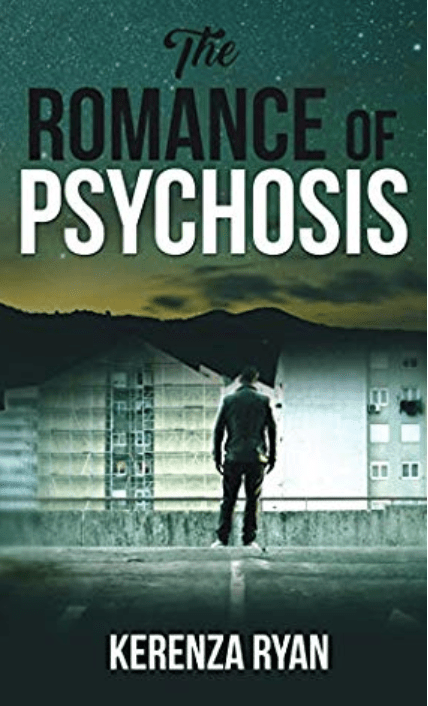
I met self-published author Kerenza Ryan at the Michigan Writer’s Workshop in the spring. She’s recently published her debut novel, The Romance of Psychosis. It looks unflinchingly at the realities of mental illness. With raw, moving language, it serves as a testament to the power of love. I sat down to have a conversation with Kerenza about all things writing.

Q: When did you start writing?

A: I’ve always been a writer. I would open up the same book again and again to tell different stories to go with the pictures. I don’t know that I always thought I would publish, but I knew I would never stop writing.

Q: What authors or artists serve as an inspiration for you?

A: Neal Schusterman, the author of Challenger Deep, gave me the courage to write honestly about my illness. I have a dash of Stephen King grittiness, but not to the extent of being explicit. I also feel like I’m deeply inspired by Josh Ritter and Kimya Dawson, both musicians.

Q: What’s your approach to dealing with writer’s block?

Writing. Which is a stupid answer, but I’m serious. Write about how you have writers block and you hate it. Write a book review. Write a poem about your cat. Just write something.

Q: If you had one piece of advice for new writers, what would it be?

Write often. Don’t worry about word count, or reading writing advice, or anything else if it’s at the expense of writing. As my old Orchestra teacher used to say, practice makes better.

Q: Tell me a little about The Romance of Psychosis.

A: The Romance of Psychosis is a suspense novel with romantic elements. It follows Hugo Sousa through his first psychotic break. He experiences drastic mood changes and also has delusions, or confusion about what is and isn’t real. He begins to believe his fiance is the Virgin Mary, and Julia, his fiance, struggles to get him help. This novel shows that, though love cannot cure, love can go a long way towards helping someone heal.

Q: What has the process of self-publishing looked like for you?

I spent a lot of time doing research, a heck of a lot of time, and things still didn’t come out exactly how I wanted. I mainly listened to podcasts like The Self-Publishing Show and went on Facebook groups like 20to50k. One answered questions I didn’t know I had, and the other one answered questions I was dumb enough to think of. All in all, it’s honestly been pretty great, but I’m sure there are people who would disagree.

Design a site like this with WordPress.com
Get started